English| EUR
Suggested for you
More currencies
Choose a language
Bulgaria begins where Romania ends, along a frontier the Danube draws for most of its length. This distance from Bulgaria to Romania guide sets out the figures that actually matter: river width at the bridges, capital-to-capital road kilometres, and the crossing points in between. It explains which number applies to which kind of trip.
Quick answer
There is no distance to speak of: Bulgaria and Romania share a border, so at the frontier the two countries touch. The gap is a river. At the busiest crossing, the Danube Bridge between Ruse and Giurgiu spans 2.8 kilometres, while Sofia and Bucharest sit roughly 380 kilometres apart by road. Crossing points operate 00:00–23:59, seven days a week, with no entry fee.
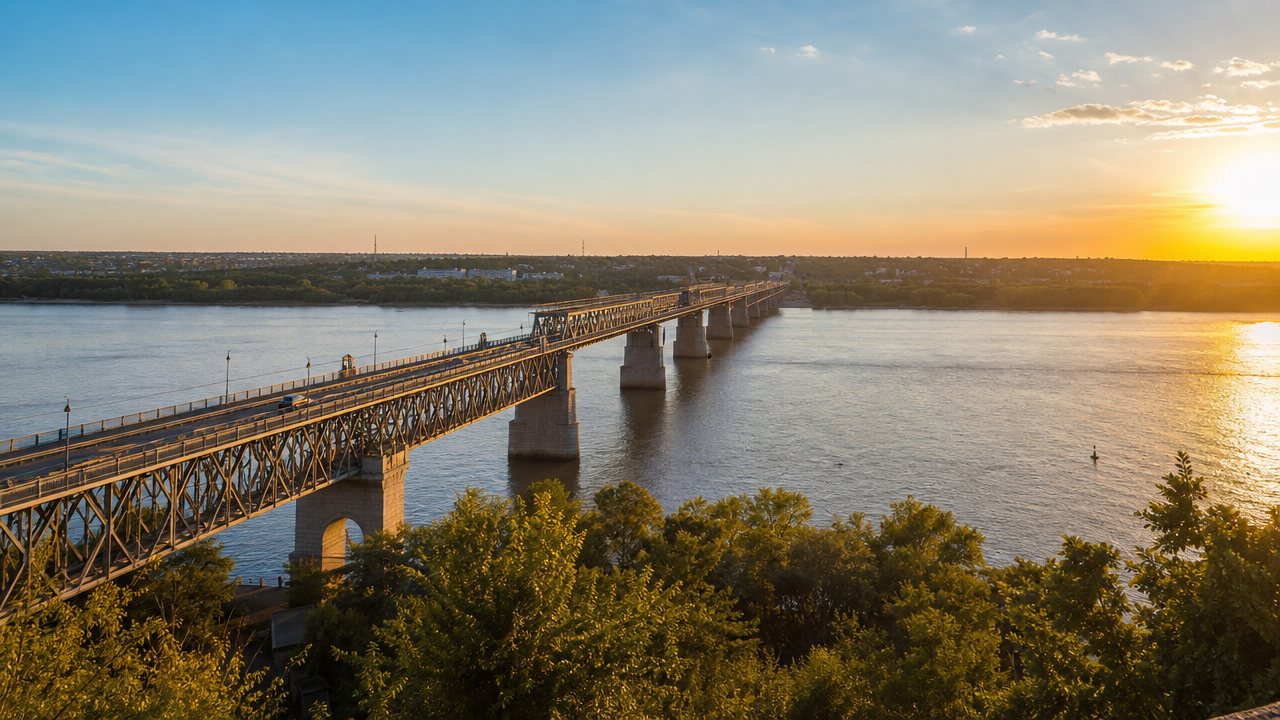
Bulgaria and Romania share roughly 608 kilometres of frontier, and the Danube does about 470 kilometres of that work alone. At Ruse, the distance from Bulgaria to Romania is therefore measured in metres rather than hours: the Danube Bridge linking the city to Giurgiu runs 2.8 kilometres from bank to bank, and it has stood since 1954. Only east of Silistra does the boundary leave the water, running overland across the Dobrudzha plateau toward the Black Sea. Two neighbours, one river, and on a clear morning a far bank close enough to read. How far apart the countries feel depends on what is being measured. Sofia and Bucharest lie about 380 kilometres apart by road, roughly five to six hours of driving. Bucharest and Ruse are barely 65 kilometres apart, which is why this Bulgaria–Romania border crossing has long worked as a commuter corridor rather than an expedition. Vidin and Calafat, at the western end, were joined by the New Europe Bridge in 2013; for decades before that, a ferry was the only option along hundreds of kilometres of riverbank. Ferries still operate at Silistra–Călărași, Oryahovo–Bechet and Nikopol–Turnu Măgurele, carrying traffic the two bridges never see. The river, not the map, sets the rhythm. Politics has narrowed the gap further. Both countries entered the Schengen area's land-border regime on 1 January 2025, ending routine passport checks between them, though identity documents and vehicle paperwork still travel with the driver. Crossings operate around the clock, which makes timing a question of traffic and daylight rather than opening times; the address on any map is simply the Bulgaria–Romania Border. For anyone based in the Romanian capital, this collapses a foreign country into an afternoon: the neo-baroque waterfront of Ruse, the rock-hewn churches at Ivanovo, the Roman ruins near Nikopol, all within easy reach of the southern bank. Bulgarian signage renders the question as разстояние от България до Румъния, and the phrasing is telling — it describes a river width, not a voyage. Read correctly, the distance from Bulgaria to Romania is less a number than a decision about which bridge, which hour and which bank to start from.
“The Danube Bridge at Ruse runs 2.8 kilometres from bank to bank — the whole distance between two countries.”
Bulgaria and Romania share a long border primarily defined by the Danube River, meaning travel routes depend heavily on your specific departure and arrival cities. Major crossings connect the two nations via road and rail bridges, with the most common routes linking Bucharest to northern Bulgarian hubs.
E85/DN5 road via Giurgiu-Ruse Bridge
Direct bus from Bucharest Autogara Filaret to Ruse
CFR/BDZ international rail line to Ruse station
Travel during daylight for better road conditions when navigating the border crossings. The border-crossing points are accessible 24/7, allowing flexibility for your transit plans.
The most effective time for travel between Bulgaria and Romania is during the shoulder seasons of May, June, September, and October. These months offer a balance of moderate temperatures and manageable traffic volumes.
Hot; often exceeding 30°C
Expect longer wait times due to peak holiday tourism and vacation traffic.
Mild; 15°C to 25°C
Ideal conditions for road travel with stable weather and predictable transit times.
Cold; frequent snow, 0°C to 5°C
Winter weather can significantly impact road conditions and travel speeds, especially in mountainous regions.
—
Mid-week morning travel typically avoids the high volumes associated with weekend leisure trips.
Verdict: Plan your travel for Tuesday to Thursday during May or October to experience the most consistent road conditions and minimal delays.
Border crossings between Bulgaria and Romania operate continuously throughout the week to facilitate transit. Travelers can cross the border at any time to manage their journey distance.
Crossing between Bulgaria and Romania is straightforward once your documents and vehicle paperwork are in order, so work through these steps in the weeks leading up to travel.
Everything you need to know about distance from bulgaria to romania
The geographical distance from bulgaria to romania varies significantly depending on your specific departure and arrival cities, such as the common route between Sofia and Bucharest. Most land travel occurs via the Danube River crossings, which connect the two neighboring nations. It is helpful to plan your itinerary by checking regional road maps before departure. Because international boundaries are extensive, direct travel distance from bulgaria to romania is best measured by specific transit points. Travel times depend heavily on traffic conditions and which crossing point you choose, such as the bridge at Ruse or Vidin. On average, you should allocate several hours for the journey to account for road conditions and potential administrative stops. International crossings between these two countries are free, with an entry fee of 0 BGN for travelers. This applies to all standard transit points along the shared border. You can travel across the border at any time, but the best arrival window is 00:00–23:59 to account for your personal schedule. It is wise to travel during daylight for better road conditions. Always carry a valid passport or national identity card, as both countries enforce standard border protocols for international visitors. Verify your travel documentation requirements well in advance to ensure a smooth crossing. All border crossings are open 24/7 to facilitate continuous transit between the two nations. This provides flexibility for your travel plans, though checking road conditions remains a priority. For day trips, focus on selecting a crossing point that aligns with your ultimate destination in either country. Grouping your visits into specific regions makes the logistical planning more efficient. The transit routes are well-marked and generally straightforward for most motorists. Follow local traffic regulations and signage to ensure a safe journey as you navigate the distance from bulgaria to romania.